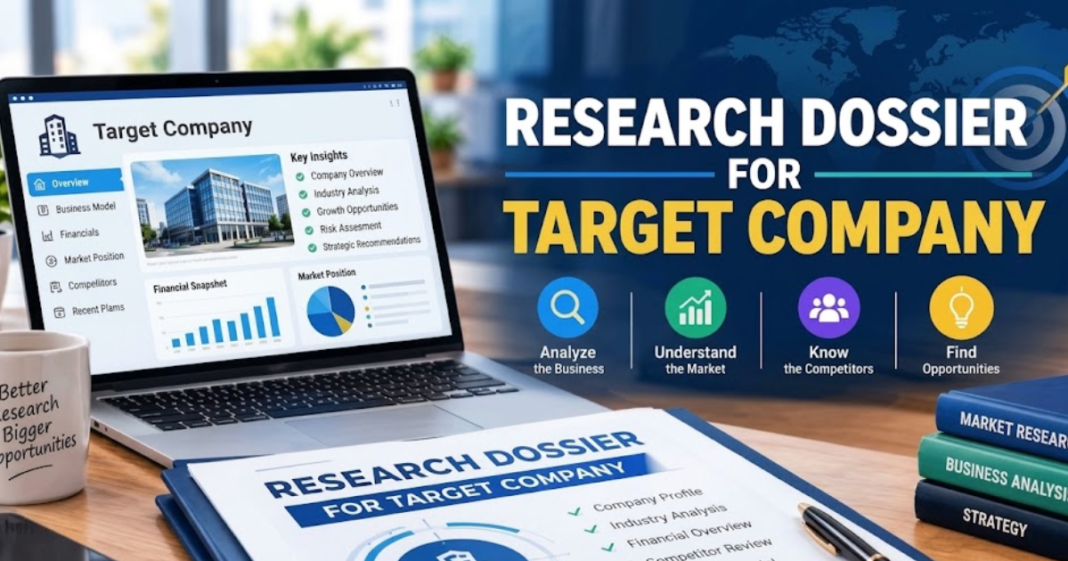
Building a thorough research dossier for the target company is the ultimate competitive advantage when navigating six-figure B2B negotiations and complex corporate buying structures. Modern enterprise sales cycles no longer reward simple persistence or generic pitch decks. Today, large organizations operate with complex buying committees, strict budget scrutinies, and heightened risk aversion. When selling to corporate executives, surface-level preparation guarantees quick rejection. A dedicated intelligence document bridges the gap between cold outreach and strategic alignment. It transforms your sales strategy from speculative pitching into high-value problem solving that commands immediate attention.
Enterprise deals demand an insider perspective before your first discovery call takes place. Corporate buying groups require tailored discussions that address their immediate operational bottlenecks, competitive pressures, and long-term strategic initiatives. Without comprehensive account intelligence, sales representatives waste valuable introductory meetings asking basic questions that public records could easily answer. By synthesizing open-source intelligence, leadership priorities, and financial health into a structured format, account executives present solutions grounded in reality. This level of thorough preparation establishes immediate authority, builds executive trust, and sets a foundation for lasting enterprise partnerships.
What Is a Research Dossier for the Target Company?
Defining Deep Account Intelligence in B2B Deals
A comprehensive account intelligence summary compiles critical corporate data, organizational hierarchies, and market positioning into an actionable report. Unlike general customer relationship management records that list phone numbers and contact emails, a strategic account summary dissects operational mechanics. It details recent earnings statements, corporate acquisitions, technology deployments, and executive changes. This deep intelligence enables sales teams to understand the external pressures driving internal decision-making. By analyzing these factors before initiating conversation, reps position their offerings as direct responses to active organizational needs.
Surface-level sales research relies on superficial social media browsing, whereas deep corporate intelligence uncovers real strategic alignment. High-performing account executives map corporate dependencies to understand how individual departments interact and share resources. This structured synthesis allows sales organizations to anticipate operational hurdles long before formal contract negotiations begin. Consequently, teams deliver contextualized proposals that resonate with key corporate stakeholders across multiple departments, drastically improving overall conversion rates.
The Difference Between CRM Data and Strategic Intelligence
Standard CRM software stores static contact details, basic engagement history, and deal stage estimates. While this operational tracking helps manage pipeline logistics, it lacks the contextual depth necessary to win complex enterprise accounts. Strategic account intelligence expands beyond internal interaction logs to aggregate external market realities. It evaluates competitive threats, quarterly growth metrics, regulatory hurdles, and active job postings. This expanded scope illuminates where a company invests capital and where internal operational gaps currently exist.
Relying solely on basic contact records leads to disconnected sales conversations that fail to engage executive buyers. Modern enterprise leaders expect vendors to demonstrate immediate understanding of their broader commercial landscape. A structured intelligence document delivers this background by organizing fragmented information into clear strategic insights. Sales teams use these insights to tailor value propositions, align solution capabilities with active corporate mandates, and eliminate friction throughout lengthy sales cycles.
The Anatomy of a High-Impact Target Company Dossier
Key Data Points Every Sales Dossier Must Include
Constructing a high-performing intelligence document requires gathering specific, high-value metrics across multiple business functions. Your account analysis must evaluate financial health metrics, including annual recurring revenue, recent funding rounds, capital expenditure allocations, and cost-cutting initiatives. Technographic tracking forms another critical pillar, exposing current software stacks, cloud infrastructure choices, and legacy platform dependencies. Identifying these architectural elements helps sales professionals highlight integration points, displacement opportunities, and immediate operational gains.
Beyond financials and software infrastructure, intelligence briefs must monitor public press releases, regulatory filings, and market expansions. Tracking trigger events like corporate restructurings, executive transitions, or major product rollouts creates natural entry points for outreach. By mapping solution capabilities directly to these active organizational developments, reps establish immediate relevance. This precise contextual alignment proves your team understands current organizational momentum, separating your proposal from lower-tier vendor pitches.
Mapping the Buying Center and Stakeholder Dynamics
Enterprise purchasing decisions rarely rest on a single individual’s authority. Complex deals require consensus among economic buyers, technical evaluators, end-user champions, and procurement officers. A thorough research dossier for the target company maps these internal relationships, detailing decision-making authority, career backgrounds, and individual performance benchmarks. Understanding each stakeholder’s professional priorities helps sales teams tailor communication effectively, addressing technical concerns for software engineers while emphasizing return on investment for financial officers.
Uncovering internal reporting hierarchies prevents sales reps from misallocating time on non-decision makers. Visualizing stakeholder alignment allows sales managers to multi-thread accounts efficiently, building broad support across multiple organizational tiers. This comprehensive influence mapping ensures deals maintain momentum even if a primary internal champion changes roles. By proactively addressing potential objections from different departments, your sales organization secures consensus early in the buying journey.
Reasons Enterprise Deals Fail Without Account Intelligence
Misaligned Value Propositions and Generic Pitches
Generic sales approaches fail in enterprise sales because large organizations face unique operational environments. When vendors present standardized slide decks, prospective clients perceive a lack of genuine interest and business understanding. Executive buyers quickly lose patience with sales representatives who fail to connect software features to actual organizational challenges. Without deep account research, discovery calls devolve into basic questioning sessions that frustrate prospective buyers and undermine vendor credibility.
Misaligned value propositions waste crucial early interactions and destroy deal momentum before proposals take shape. Enterprise organizations seek strategic partners who demonstrate clear insight into their market position and operational constraints. Delivering generic messaging signals that your sales team views the prospective account as just another transaction. Deep research enables customized demonstrations, focused ROI frameworks, and tailored business cases that clearly demonstrate commercial value from day one.
Inability to Navigate Internal Politics and Silos
Large corporations operate with complex internal political dynamics, competing department priorities, and isolated communication channels. Introducing a new enterprise platform inevitably impacts multiple teams, creating friction between departments with contrasting goals. Without comprehensive stakeholder intelligence, sales reps risk partnering with low-influence managers who lack budget approval power. Worse, reps may unknowingly bypass critical security officers or legal advisors who hold veto power over new software adoptions.
Failing to identify internal politics allows unseen objections to derail late-stage contract negotiations. A structured intelligence brief flags cross-departmental dependencies early, allowing representatives to address concerns before formal evaluations take place. By understanding departmental incentives and potential ideological roadblocks, sales leaders build consensus among all affected business units. This multi-threaded management approach mitigates political risk and keeps complex deals moving toward final approval.
Missing Critical Strategic Trigger Events
Timing plays an essential role in enterprise deal execution. Organizational priorities shift rapidly following corporate restructurings, executive appointments, regulatory changes, or product launches. Sales teams operating without real-time account tracking miss these critical strategic windows when budgets open and legacy vendors face review. Reaching out after budget cycles close guarantees extended sales delays, regardless of how strong your underlying product offering might be.
A well-maintained intelligence brief tracks corporate announcements, hiring sprees, and industry movements continuously. Identifying corporate triggers as they occur enables reps to contact decision-makers precisely when internal urgency peaks. Aligning outreach with major corporate milestones positions your product as a timely solution to an active organizational challenge, dramatically shortening deal velocity and boosting closed-won ratios.
How a Research Dossier Accelerates the Enterprise Sales Cycle
Shortening Discovery with Tailored Insights
Traditional sales discovery models rely heavily on asking prospective customers basic operational questions. In large enterprise environments, busy executives expect sellers to arrive informed about public facts. A detailed research dossier for the target company transforms discovery calls from routine information-gathering sessions into high-level strategy discussions. Sales reps skip introductory questions and immediately offer provocative insights regarding industry benchmarks, operational efficiencies, and growth strategies.
Starting conversations with clear context demonstrates respect for the executive’s time and builds professional authority. Instead of asking what software platforms are currently installed, reps validate existing infrastructure choices and discuss specific optimization options. This expert approach builds immediate trust, encourages prospective clients to share sensitive internal challenges, and drastically accelerates the early stages of enterprise deal development.
Crafting Hyper-Personalized Account-Based Marketing (ABM) Campaigns
Account-based marketing strategies require absolute alignment between sales outreach and marketing messaging. Standard marketing automation campaigns often fail in enterprise environments because broad messaging lacks account-specific context. Leveraging structured account intelligence allows marketing and sales teams to build highly personalized campaign materials. Every landing page, email sequence, whitepaper, and custom demo addresses the specific pain points identified within the account report.
This targeted marketing approach ensures enterprise decision-makers encounter messaging designed specifically for their operational context. When buying committees see consistent, relevant messaging across every touchpoint, brand credibility increases significantly. Personalized campaign assets demonstrate a deep commitment to solving the account’s unique challenges, driving higher engagement rates and securing executive-level discovery calls.
How to Build a Research Dossier for a Target Company
Step-by-Step Framework for Gathering Account Intelligence
Creating an effective account intelligence brief requires a systematic approach to data collection, verification, and analysis. Begin by compiling foundational corporate data from public regulatory filings, quarterly earnings call transcripts, and investor presentations. These official documents highlight executive priorities, revenue targets, risk factors, and planned capital investments. Next, evaluate third-party news outlets, industry trade publications, and press releases to track recent market developments, partnerships, and executive announcements.
+-----------------------------------------------------------------------+
|                 ACCOUNT INTELLIGENCE COLLECTION                       |
+-----------------------------------------------------------------------+
                                   |
                                   v
+-----------------------------------------------------------------------+
|  1. Public Filings & Earnings Calls                                   |
|     * Review annual reports, 10-K filings, quarterly updates          |
|     * Identify top-level strategic priorities & capital allocation    |
+-----------------------------------------------------------------------+
                                   |
                                   v
+-----------------------------------------------------------------------+
|  2. External Market & Industry Media                                  |
|     * Track trade journals, press releases, partner announcements     |
|     * Flag recent trigger events, acquisitions, & expansion plans     |
+-----------------------------------------------------------------------+
                                   |
                                   v
+-----------------------------------------------------------------------+
|  3. Technographic & Organizational Analysis                           |
|     * Inspect job postings & technical forums for software stack    |
|     * Map organizational charts, executive roles, & decision-makers   |
+-----------------------------------------------------------------------+
After gathering corporate and financial context, turn your focus to technographic and human intelligence. Analyze open job descriptions on company career pages to identify active software deployments, technical skill gaps, and expanding business units. Utilize professional networking sites to map corporate reporting lines, identify key decision-makers, and spot mutual professional connections. Finally, synthesize these disparate data sources into a standardized, easy-to-read template that account executives can reference and update continuously.
| Intelligence Layer | Primary Data Sources | Strategic Value for Sales Teams |
| Financial & Executive | 10-K Filings, Earnings Transcripts, Investor Decks | Identifies budget availability, cost pressures, and corporate KPIs |
| Operational & Market | Trade Press, Regulatory Notices, Press Releases | Uncovers expansion plans, market risks, and strategic trigger events |
| Technographic & Talent | Career Boards, GitHub, Software Review Sites | Exposes technology stack gaps, skill shortages, and platform needs |
| Org Structure & People | LinkedIn, Professional Networks, Org Charts | Maps decision-makers, economic buyers, and internal champions |
Conclusion
Navigating complex enterprise deals successfully requires abandoning legacy, high-volume sales tactics in favor of structured account intelligence. Building a comprehensive research dossier for the target company equips sales teams with the strategic clarity needed to engage executive buyers confidently. By systematically analyzing financial performance, buying center dynamics, technology choices, and market triggers, reps build value propositions that align with active corporate goals. This research-driven approach turns cold outreach into consultative engagements, shortens sales cycles, and eliminates friction across multi-stakeholder negotiations.
Integrating structured account research into your standard revenue operations transforms organizational sales efficiency. Sales leaders who mandate thorough preparation before account engagement enjoy higher win rates, larger average deal sizes, and stronger long-term customer relationships. In an increasingly competitive enterprise sales environment, deep account intelligence remains the single most reliable driver of consistent revenue growth. Investing the time to construct actionable account summaries ensures your sales organization remains positioned as a trusted strategic partner.
FAQs
What is a research dossier for a target company?
A research dossier for a target company is a structured intelligence document that aggregates financial records, technology stack details, executive background information, and corporate priorities to prepare sales teams for complex B2B negotiations.
How long should it take to create a target company intelligence report?
Building a high-impact intelligence brief typically takes two to four hours of research per strategic account, depending on the availability of public financial filings, trade news, and organizational chart data.
How does account intelligence improve enterprise sales conversion rates?
Account intelligence improves conversion rates by allowing sales representatives to tailor value propositions directly to active corporate pain points, establish immediate authority with executive buyers, and navigate multi-stakeholder approval processes smoothly.