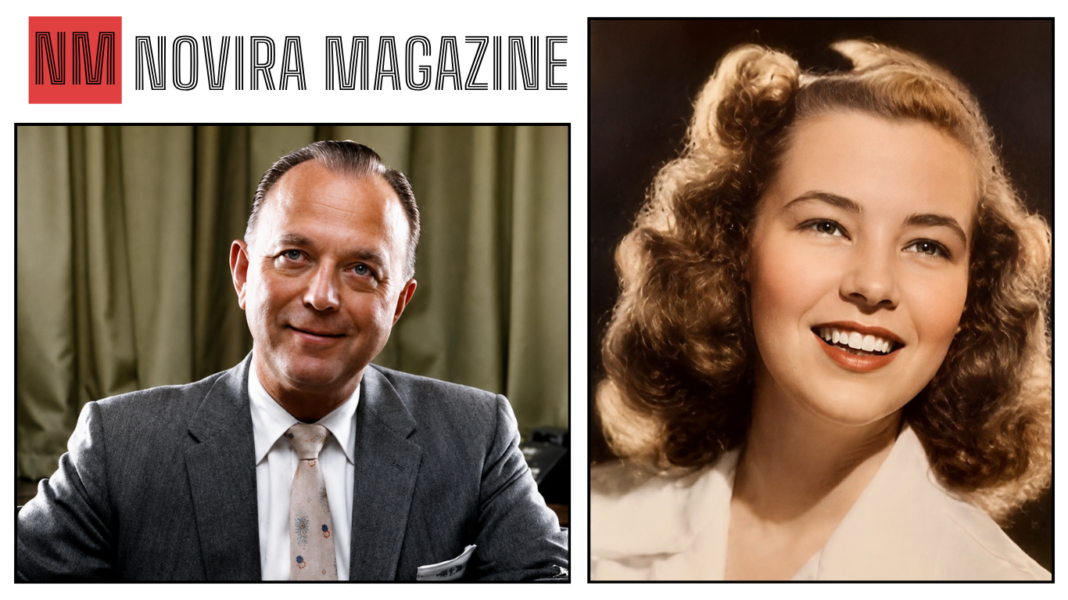
When exploring the history of the world’s most famous fast-food dynasty, Marilyn Kroc Barg remains a figure whose quiet life stood in stark contrast to her father’s sprawling global influence. While Ray Kroc became a household name by turning a small California hamburger stand into the global juggernaut known as McDonald’s, his only biological child chose a completely different path. She avoided corporate spotlights, boardrooms, and media scrutiny, carving out a private identity centered on her personal passions and love for animals.
Understanding her story requires stepping away from the corporate narratives that usually define the Kroc family name. While millions of people across the globe recognize the Golden Arches, very few know about the woman who carried the family surname during the company’s meteoric rise. Her life story offers a fascinating glimpse into what it was like to grow up alongside the birth of modern American fast-food culture while choosing to live far outside its shadow.
Her journey was defined not by corporate ambitions, but by a deep dedication to equestrian sports, horse breeding, and personal independence. Rather than relying on her father’s expanding fortune or seeking a public executive role, she built a grounded, quiet life in Illinois. Re-examining her biography reveals a personal legacy that deserves recognition on its own terms, separate from the multi-billion-dollar business empire her father built.
Early Life and Upbringing in Chicago (1924–1940s)
Born on October 15, 1924, in Cook County, Illinois, Marilyn Janet Kroc entered the world long before her family achieved wealth or fame. Her early childhood unfolded in a modest Midwestern environment during an era when her father worked tirelessly as a traveling salesman. At the time of her birth, Ray Kroc was making a living selling paper cups for the Lily-Tulip Cup Corporation and playing piano for local radio broadcasts to keep the family afloat.
Growing up during the challenging years of the Great Depression shaped her early understanding of hard work and financial resilience. Her household was managed primarily by her mother, Ethel Janet Fleming, who created a stable home environment while Ray spent long weeks traveling across the country selling paper goods. These formative decades were far removed from the luxury and prominence that would later define the Kroc surname in American pop culture.
Growing Up as Ray Kroc’s Only Child
As an only child, Marilyn shared a unique bond with her parents, particularly with her mother, who was a former silent film actress. Ethel Fleming had stepped away from her acting career to focus entirely on raising her daughter and supporting her husband’s fledgling business ventures. This maternal influence instilled in young Marilyn a sense of poise, artistic appreciation, and a lifelong preference for personal privacy over public attention.
While Ray Kroc was constantly pursuing new commercial opportunities—including his eventual distribution agreement for Prince Castle Multimixer milk-shake machines—life at home remained relatively quiet. Her childhood was characterized by suburban stability rather than corporate chaos. This grounded upbringing played a vital role in shaping her personal values, ensuring that she remained unpretentious even as her family’s financial situation began to shift dramatically during her young adult years.
Ray Kroc’s Rise and Marilyn’s Private Path
By the mid-1950s, Ray Kroc’s career took a historic turn when he discovered the McDonald brothers’ efficient drive-in operation in San Bernardino, California. As Ray spearheaded the massive expansion of McDonald’s franchises and eventually purchased the entire company in 1961 for $2.7 million, his daily life became dominated by rapid corporate growth, real estate acquisitions, and intense national media coverage.
Despite her father’s dramatic transition into one of America’s most celebrated business leaders, Marilyn consciously chose not to participate in the fast-food business. She showed little interest in corporate operations, franchising logistics, or executive boardrooms. Instead, she supported her father from a distance while maintaining her own distinct lifestyle, proving that personal fulfillment did not depend on joining the family business.
Personal Life, Marriages, and Family
Marilyn’s personal adult life was centered in her home state of Illinois, where she built long-lasting community ties. In April 1949, she married Sylvester Nordly Nelson in a quiet ceremony. Although the marriage eventually ended in divorce, it marked an important chapter in her young adulthood as she established her own independence while her father’s commercial ventures were beginning to take off nationwide.
In May 1960, she married James Walter Barg, with whom she built a harmonious and lasting marriage until her death. Throughout both marriages, she chose not to have children, meaning Ray Kroc had no direct grandchildren through his only biological daughter. Together with James Barg, she focused on creating a comfortable domestic life surrounded by close friends and her beloved animals.
Life in Evanston and Arlington Heights
Following her second marriage, the couple settled in the Chicago suburbs, living in Evanston and later moving to Arlington Heights, Illinois. This region allowed her to remain close to her Midwestern roots while enjoying the space required for her personal hobbies. The quiet suburban setting suited her preference for privacy, allowing her to live free from public intrusion or media curiosity.
It was during this period that she officially adopted the name Marilyn Kroc Barg. In her local community, she was recognized not as the heiress to a fast-food fortune, but as a gracious neighbor, active community member, and passionate horse lover. Her decision to reside in suburban Illinois reflected her lifelong desire for a stable, comfortable, and grounded existence away from corporate pressures.
Equestrian Passion: Living Outside the Fast-Food Shadow
The defining passion of her life was her deep love for equestrian sports, horse breeding, and professional horse showing. From a young age, she developed a deep affinity for horses, which evolved into a lifelong commitment to riding and competition. She spent decades actively involved in the Midwestern equestrian community, raising and showing prize horses across various regional events.
Her dedication to the equestrian world allowed her to carve out an identity entirely separate from her father’s business achievements. In the show ring and stable barns, she was judged on her skill, patience, and knowledge of horse care rather than her famous last name. For Marilyn, working with horses was not merely a casual pastime, but a core aspect of her personal identity that brought her genuine joy and purpose.
Corporate Ties and Philanthropic Work
Although she deliberately avoided an operational career at McDonald’s, Marilyn did maintain brief official ties to the family company during its early developmental phase. In the late 1950s, she served briefly on the McDonald’s Board of Directors as a trusted family member while her father was structuring the company’s early corporate governance and expanding its franchise footprint.
Beyond her minor corporate involvement, she devoted her time and resources to charitable causes in her local community. She supported animal welfare organizations, local equestrian clubs, and health awareness programs. Her philanthropic spirit mirrored the broader charitable mindset that later became a hallmark of the Kroc family, demonstrating her commitment to helping others quietly and effectively.
Health Battles and Untimely Passing at Age 48
Throughout much of her adult life, Marilyn faced significant health challenges, most notably her ongoing battle with Type 1 diabetes. Managing the daily complexities of a chronic illness required continuous care, yet she refused to let her condition diminish her enthusiasm for horse breeding or community involvement. She carried her health struggles with remarkable dignity and resilience.
Tragically, complications arising from her condition led to her untimely death on September 11, 1973, in Arlington Heights, Illinois, at the age of 48. Her unexpected passing was a devastating loss for her husband, James Barg, her mother Ethel, and her father Ray Kroc, who survived her by more than a decade until his death in 1984. She was laid to rest in Illinois, leaving behind a legacy of quiet strength and devotion to her passions.
Why Was Marilyn Left Out of The Founder (2016)?
When the biographical drama film The Founder was released in 2016 starring Michael Keaton as Ray Kroc, audiences were presented with a dramatic look at the rise of McDonald’s. However, many viewers and historians noticed that Marilyn Kroc Barg was completely omitted from the storyline, leading many to question why Ray Kroc’s only child was left out of the Hollywood adaptation.
The primary reason for her omission was cinematic narrative compression. Feature films focusing on corporate history often condense characters and timelines to maintain narrative pace and focus on central dramatic conflicts. Because she maintained a private life far removed from her father’s intense business battles with the McDonald brothers, filmmakers chose to concentrate exclusively on Ray’s business strategies and his romantic relationships with his wives, Ethel Fleming, Jane Dobbins Green, and Joan Kroc.
FAQs
Who was Marilyn Kroc Barg?
She was the only biological child of Ray Kroc, the businessman who transformed McDonald’s into a global fast-food franchise, and his first wife, Ethel Fleming. She was an accomplished equestrian and horse breeder who chose a private life outside the fast-food business.
Did Ray Kroc have any children or grandchildren?
Ray Kroc had only one biological child, Marilyn. Because she did not have children during her marriages to Sylvester Nordly Nelson and James Walter Barg, Ray Kroc had no direct biological grandchildren.
How did Marilyn Kroc Barg die?
She passed away on September 11, 1973, at the age of 48, due to complications from Type 1 diabetes. Her death occurred more than ten years before her father passed away in January 1984.
Conclusion
In reflecting on her life, Marilyn Kroc Barg stands out as a woman who remained true to herself despite being connected to one of the most powerful corporate legacies in modern history. Rather than allowing her father’s immense wealth and fame to define her identity, she chose to build a life centered on personal authenticity, deep relationships, and her passion for equestrian sports.
Her story serves as a reminder that personal success is not always measured by corporate titles, net worth, or public fame. Through her work with horses, her quiet community support, and her dedication to family, she built a meaningful life entirely on her own terms. Today, remembering her life offers a fuller, more nuanced understanding of the human story behind the famous Kroc family name.