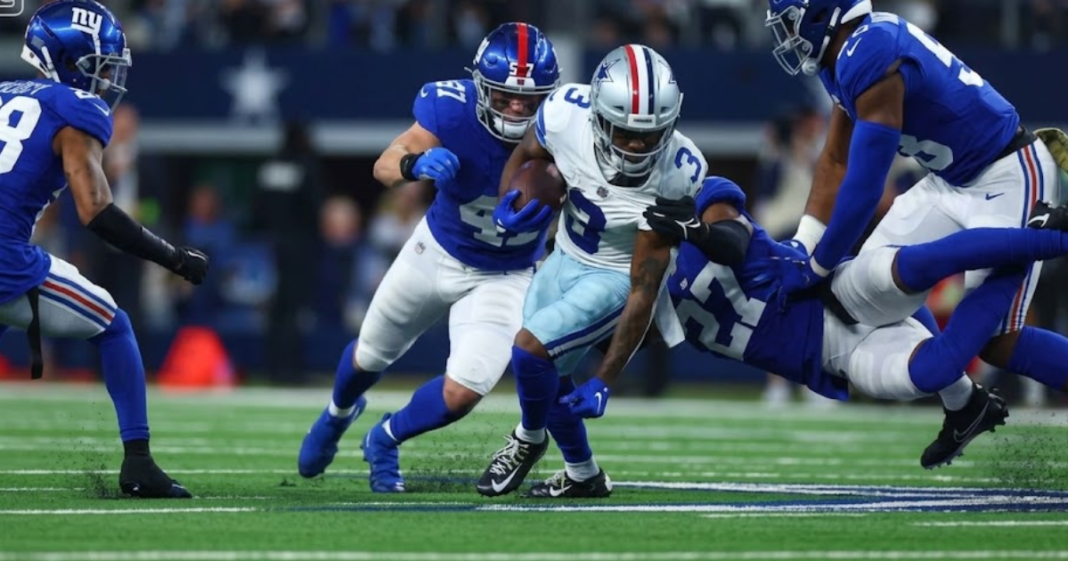
In the high-stakes battle ground of the NFC East, analyzing the top individual leaders: new york giants vs dallas cowboys match player stats examined offers an in-depth look at how individual performance dictates Divisional momentum. When these two historic rivals collide on the gridiron, team narrative often takes a backseat to the raw box score metrics delivered by individual star playmakers. From dynamic young signal-callers steering modern offensive systems to unrelenting defensive disruptors in the trenches, every snap leaves behind a clear statistical trail that highlights who controlled the tempo.
Unpacking these comprehensive metrics reveals how subtle execution edges turn into massive divisional victories. By dissecting passing charts, ground conversion percentages, target distributions, and defensive impact metrics, fans gain a clearer picture of game strategy and player efficiency. Examining the numbers side-by-side demonstrates exactly why this storied rivalry continues to captivate football enthusiasts across the country.
Introduction: Unpacking the Rivalry Numbers
Why the New York Giants vs Dallas Cowboys Rivalry Matters
Few matchups in professional sports carry the intense historical weight, natural geographic friction, and high-stakes drama of the NFC East clash between New York and Dallas. For decades, these franchise showdowns have helped define conference standings, postseason seeding, and national television viewership records. Every single matchup presents a fresh slate where legendary moments are forged, making detailed post-game numerical analysis an absolute necessity for passionate fans.
The intrinsic intensity of this divisional rivalry means that baseline statistics rarely tell the entire story without contextual analysis. A single third-down conversion or red-zone defensive stop can completely shift game momentum, reshaping the trajectory of an entire season. As both organizations continuously evolve their rosters, watching individual match leaders navigate pressure provides invaluable insight into how modern offensive and defensive schemes operate under extreme spotlight conditions.
Overview of Top Individual Leaders: New York Giants vs Dallas Cowboys Match Player Stats Examined
Looking closely at the top individual leaders: new york giants vs dallas cowboys match player stats examined, clear patterns emerge regarding offensive rhythm and defensive leverage. The winning side managed to systematically control the clock through efficient early-down conversion rates, keeping the opposing offense sidelined for long stretches. The cumulative box score reflects stark contrasts in total play counts, yards per attempt, and third-down efficiency percentages that ultimately swung the scoreboard.
Primary statistical highlights were headlined by flawless quarterback execution in the red zone alongside balanced backfield play that established heavy physical dominance. On the opposite side of the ball, defensive units battled through field-position disadvantages, posting notable individual tackle counts, pass deflections, and clutch takeaways. Evaluating these top individual leaders showcases how microscopic tactical advantages translate into macro-level game results.
Quarterback Comparison: Passing Metrics and Impact
Jaxson Dart’s Breakdown and Performance Metrics
Jaxson Dart put together a masterclass in modern quarterback execution, completing 23 of 29 pass attempts for 230 passing yards, 3 touchdowns, and 0 interceptions. Achieving a stellar passer rating of 134.2, the young quarterback demonstrated exceptional pocket composure, navigating defensive pressure while consistently finding open windows in the secondary. His surgical accuracy on third downs kept scoring drives alive and repeatedly demoralized the opposing defensive front.
Beyond the base passing yards, Dart’s decision-making in the red zone served as the definitive anchor for the entire offensive output. Protecting the football without turning it over forced the defense to defend every inch of the field, while his mobility added a crucial dimension to the rushing threat. This total command over the offense underscored his rapid maturation under bright divisional lights.
Dak Prescott’s Passing Breakdown and Numbers
Dak Prescott navigated a challenging passing environment, finishing the game with 22 completions on 34 attempts for 175 yards, 2 touchdowns, and 1 interception. Finishing with an 84.8 passer rating, Prescott routinely worked under heavy pocket pressure, forcing him into quick check-downs and shorter passing lanes throughout the contest. Despite the tight defensive coverage, he managed to engineer two impressive scoring drives to keep his squad within striking distance.
The lone interception proved costly in terms of field position, interrupting an otherwise structured rhythm in the second half. While Prescott effectively distributed targets across his receiving core, the lack of explosive vertical plays limited quick-scoring potential. His statistical performance reflected a veteran quarterback fighting through adverse game scripts while trying to maintain baseline offensive momentum.
Ground Game Dominance: Rushing Leaders Analyzed
Cameron Skattebo and the Giants’ Rushing Attack
Cameron Skattebo set a physical tone on the ground, leading all rushers with 18 carries for 81 yards and a hard-fought touchdown. Averaging 4.5 yards per carry, Skattebo consistently gained yards after contact, wearing down the opposing defensive front and generating crucial push on early downs. His relentless running style allowed the offense to stay ahead of the chains and maintain control over game flow.
Complementing Skattebo’s power running, quarterback Jaxson Dart contributed 54 rushing yards on 11 carries, while Devin Singletary added key secondary touches. Together, the rushing attack compiled 165 total yards on 37 attempts, effectively establishing physical superiority at the line of scrimmage. This balanced rushing foundation opened up passing lanes and secured a decisive advantage in time of possession.
Javonte Williams and the Cowboys’ Ground Production
Javonte Williams spearheaded the Cowboys’ backfield efforts, generating 41 rushing yards and 1 touchdown on 12 carries. Williams exhibited great vision on inner-zone concepts, punching through tight defensive gaps to maximize yardage on limited opportunities. His touchdown run provided a vital spark for Dallas during a crucial stretch of play.
However, the overall ground game struggled to establish consistent volume, compiling just 69 total rushing yards on 16 team attempts. Forced into obvious passing situations due to early point deficits, the offense was unable to feature Williams as heavily as planned. This game-script restriction hindered their ability to balance the offense and execute play-action concepts effectively.
Receiving Corps: Standout Playmakers and Targets
Isaiah Likely and Malik Nabers Lead the Giants
Tight end Isaiah Likely delivered a star performance in the passing game, catching 8 passes for 78 yards and 2 touchdowns. Likely proved to be an matchup nightmare across the middle, repeatedly uncovering against linebacker coverage and creating yards after the catch. His red-zone efficiency proved decisive, hauling in scoring passes that built a comfortable lead.
Receiver Malik Nabers complemented Likely’s interior dominance by securing 6 receptions for 69 yards, stretching the defense laterally. Darnell Mooney and Malachi Fields also contributed timely grabs to sustain extended drives. The total synergy between these pass-catchers showcased an offensive system operating at peak execution efficiency.
CeeDee Lamb and the Cowboys’ Air Attack
Star receiver CeeDee Lamb led the Dallas receiving corps with 5 catches for 44 yards and 1 touchdown on 8 targets. Subjected to rolled safety coverages and bracket techniques, Lamb fought hard for every yard, making contested catches in traffic to secure crucial first downs. His scoring catch exemplified his elite red-zone focus and route precision.
Javonte Williams added 5 receptions out of the backfield for 31 yards and a touchdown, while George Pickens hauled in 3 catches for 28 yards. Despite these solid individual contributions, the passing game lacked the explosive vertical boundary plays needed to erase a multi-score gap quickly. The secondary maintained structured leverage, limiting post-catch yardage across the board.
Defensive Game-Changers: Tackles, Sacks, and Turnovers
Giants Defensive Standouts: Tremaine Edmunds and Jevon Holland
Middle linebacker Tremaine Edmunds anchored the defense with 8 total tackles, including 7 solo stops, constantly diagnosing plays before they developed. Edmunds controlled the middle of the field, eliminating intermediate passing lanes and plugging running gaps before ball-carriers reached the second level. Arvell Reese supplemented this effort with 5 solo tackles and a crucial tackle for loss.
Safety Jevon Holland made the game’s biggest defensive play by securing a timely interception to stop a promising drive. Holland’s instinctual range in the backend prevented big plays over the top and forced opposing quarterbacks into uncomfortable progressions. This combined defensive discipline limited damage and protected key leads down the stretch.
Cowboys Defensive Leaders: Donovan Ezeiruaku and Caleb Downs
Linebacker Donovan Ezeiruaku delivered an active performance for the Dallas defense, racking up 10 total tackles, 0.5 sacks, and a forced fumble. Ezeiruaku displayed high effort across all four quarters, constantly pursuing ball-carriers from sideline to sideline and disrupting timing in the backfield. Jalen Thompson provided steady support with 9 tackles in secondary coverage.
Defensive back Caleb Downs contributed 8 tackles, 1 sack, and a forced fumble, highlighting his versatility as a safety blitzing off the edge. Cornerback Daron Bland added 8 tackles to help bottle up outside run attempts. Despite these strong individual stat lines, the defense was unable to force enough third-down stops to get off the field consistently.
Conclusion
Analyzing the top individual leaders: new york giants vs dallas cowboys match player stats examined clearly illustrates that total offensive efficiency and ball security determined the outcome. Behind Jaxson Dart’s poised 3-touchdown performance, Cameron Skattebo’s physical rushing, and Isaiah Likely’s dominant red-zone receiving, New York earned a earned 28–20 victory. Controlling time of possession at 36:40 compared to Dallas’s 23:20 proved to be the single most influential metric of the entire game.
While Dak Prescott, Javonte Williams, and CeeDee Lamb generated solid individual production, Dallas was ultimately hampered by limited third-down opportunities and field-position deficits. Defensive flashes from Donovan Ezeiruaku and Caleb Downs kept the contest competitive, but structural inconsistencies allowed sustained opponent scoring drives. As the season progresses, these specific player stats provide a clear roadmap for what both teams must build upon or correct in future NFC East battles.
FAQs
What were the key individual passing numbers in this matchup?
Jaxson Dart completed 23 of 29 passes for 230 yards, 3 touchdowns, and 0 interceptions, earning a 134.2 passer rating. Dak Prescott completed 22 of 34 passes for 175 yards, 2 touchdowns, and 1 interception with an 84.8 passer rating.
Who was the top rushing leader during the game?
Cameron Skattebo led all rushers with 81 yards and 1 touchdown on 18 carries, averaging 4.5 yards per carry. Javonte Williams led Dallas with 41 rushing yards and 1 touchdown on 12 attempts.
How did receiver targets impact the final scoreboard?
Tight end Isaiah Likely proved to be the top receiver, catching 8 passes for 78 yards and 2 touchdowns. CeeDee Lamb led Dallas with 5 receptions for 44 yards and 1 touchdown on 8 targets.
Which defensive players recorded the highest tackle totals?
Donovan Ezeiruaku led all defensive players with 10 total tackles alongside 0.5 sacks and a forced fumble. Jalen Thompson recorded 9 tackles, while Tremaine Edmunds led New York with 8 tackles (7 solo).